
Home › The Blueberry Method
The Blueberry Method
Bilberry vs Blueberry for Eyes: The Wild Arctic Cousin and Why It Gets the Attention
Same family, different berry. Here is how to tell them apart, which one eye formulas use, and why the berry alone is only part of the story.
By The Clear Window editors · Updated November 15, 2026
Quick answer
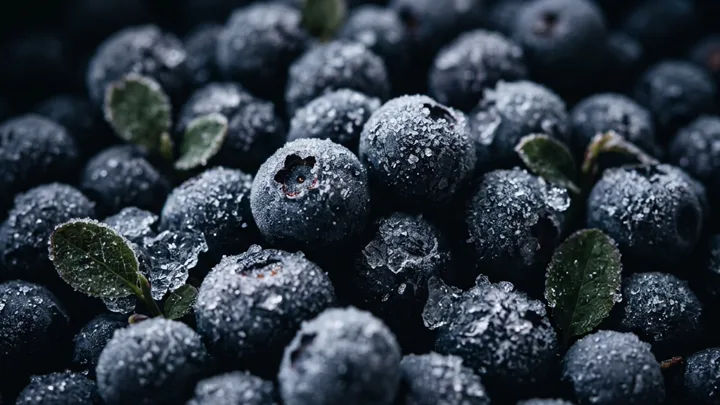
The bilberry is the wild northern cousin of the blueberry. For eyes, formulas pick the bilberry. The makers of Oculume say the wild arctic kind carries about three times the anthocyanins of a common blueberry. The blueberry in your grocery store is a good fruit, but it is not the berry the Blueberry Method calls for.
Side by side
| Wild arctic bilberry | Supermarket blueberry | |
|---|---|---|
| Where it grows | Wild, in the far north of Europe | On farms |
| Inside the berry | Dark red-purple all the way through | Pale, almost green-white |
| Anthocyanins | About three times more, the makers say | The starting point |
| Harvest | About 40 days a year, the makers say | In stores all year |
| Other names | Nordic blueberry, European blueberry | Blueberry |
| In the Blueberry Method | The berry it calls for | Not the one it calls for |
How to tell them apart
The easiest test is to cut one open.
A supermarket blueberry is blue on the outside and pale on the inside. A bilberry is dark all the way through, and it will stain your fingers to prove it. That color is the anthocyanin. It is the reason people who care about their eyes go looking for this berry by name.
Nordic blueberry, arctic blueberry, bilberry: the same berry?
Mostly, yes. In Scandinavia, the everyday name for this wild berry simply means "blue berry." So when a label says Nordic blueberry, European blueberry or wild arctic blueberry, it is usually talking about the bilberry, not the farmed fruit in the plastic box at your grocery store.
That is also why the Blueberry Method has "blueberry" in its name while the ingredient list says bilberry. Same berry. Two names.
Which is better for your eyes?
If the goal is a nice breakfast, either one. If the goal is your eyes, the wild one.
The makers say the wild arctic bilberry grows where winter drops to 30 below zero, and that the hard cold is why it carries about three times the anthocyanins. That is why the Blueberry Method is built on it.
So when you clean your glasses for the third time today and the label is still a blur, a bigger bowl of supermarket blueberries is not the missing piece.
Why most bilberry bottles disappoint
Here is the catch. Buying a bottle that says "bilberry" doesn't settle it.
The makers say ordinary heat drying can destroy up to 80% of the berry's active compounds before the capsule is even filled. So two bottles can both say bilberry on the front and be very different on the inside.
If you took bilberry for months and felt nothing, that may be why. It wasn't you, and it wasn't the berry. It was what happened to the berry on the way to the bottle. Why the cold matters.
Bilberry alone, or in a full formula?
Bilberry is one part of the picture. Think about what your eyes are up against all day: the phone, the TV, the LED bulbs in every room.
The bilberry brings its anthocyanins. It does not filter that light. That job belongs to lutein and zeaxanthin, two pigments from the marigold flower that your retina uses like sunglasses on the inside. And astaxanthin, from cold-water algae, is there to support the energy of the eye's cells, for eyes that feel dry, heavy and tired by evening.
Oculume puts them together: wild arctic bilberry, kept cold, with lutein, zeaxanthin, vitamin C and astaxanthin in one capsule. Why the combination matters.
What to look for on a bilberry label
- The word "wild," and where it's from. You want the wild arctic bilberry, not a "berry blend."
- How it was handled. Cold, not dried with heat.
- What comes with it. Lutein, zeaxanthin and astaxanthin in the same capsule.
- A way out. A money-back guarantee long enough to give it a fair try.
Why the wild berry is harder to come by
You can plant a field of blueberries. You can't plant a tundra. The makers say the wild arctic bilberry is picked in a window of about 40 days a year in northern Europe, and when a batch is gone, the next one waits for the next harvest.
The simple way to get wild arctic bilberry
You don't care about berry names for their own sake. You care about reading the label without the squint and finding a friend's face across the room. So here is the short version. You could hunt for the right berry, check how it was dried, then buy lutein, zeaxanthin and astaxanthin in separate bottles and line them all up by the coffee maker.
Or you can take one Oculume capsule after breakfast. It is $33 a bottle on the 3-bottle package, shipping is free in the US, and you have 60 days to ask for your money back if you're not happy. See everything in the capsule.
Questions
Is bilberry better than blueberry for eyes?
Eye formulas use the bilberry. The makers of Oculume say the wild arctic kind carries about three times the anthocyanins of a common blueberry.
Are bilberries and blueberries the same thing?
No. They are cousins. The bilberry grows wild in northern Europe and is dark all the way through. The supermarket blueberry is farmed and pale inside.
Are Nordic blueberries the same as bilberries?
Usually, yes. Nordic blueberry and European blueberry are common names for the wild bilberry.
Can I eat blueberries for my eyes?
Blueberries are good food, so enjoy them. They are not the berry the Blueberry Method calls for, and the method also uses lutein, zeaxanthin and astaxanthin.
Where can I get wild arctic bilberry for my eyes?
Oculume brings wild arctic bilberry together with lutein, zeaxanthin, vitamin C and astaxanthin in one daily capsule.
Before you order
Review
Oculume Review
What we liked, the questions we had, and the package we'd pick.
Before you order
Is Oculume Legit or a Scam? Seven Things We Checked Before Trusting It
Seven checks, and how to avoid lookalike bottles.
Ingredients
Oculume Ingredients
Lutein, zeaxanthin, arctic bilberry, astaxanthin and vitamin C.
Before you order
Oculume Side Effects
What's in it, who should ask a doctor first, and how most people take it.
Daily use
How to Take Oculume
One capsule after breakfast. How to remember it and how long a bottle lasts.
Price
Oculume Price
3 bottles for $99, free US shipping, and where it's sold.
Guarantee
Oculume Refund Policy
60 days, empty bottles included. How to ask.
The Blueberry Method, explained
The Blueberry Method
The Blueberry Method for Eyes
What it is, why it's frozen and arctic, and the recipe question.
The Blueberry Method
Frozen Blueberries for Eyesight
Fresh, frozen or dried: why the cold is the point.
The Blueberry Method
Lutein and Zeaxanthin With Bilberry
The combination, and five things to check on any label.